
OBSERVATIONS
Light, darkness, atmosphere & the quality of what remains.
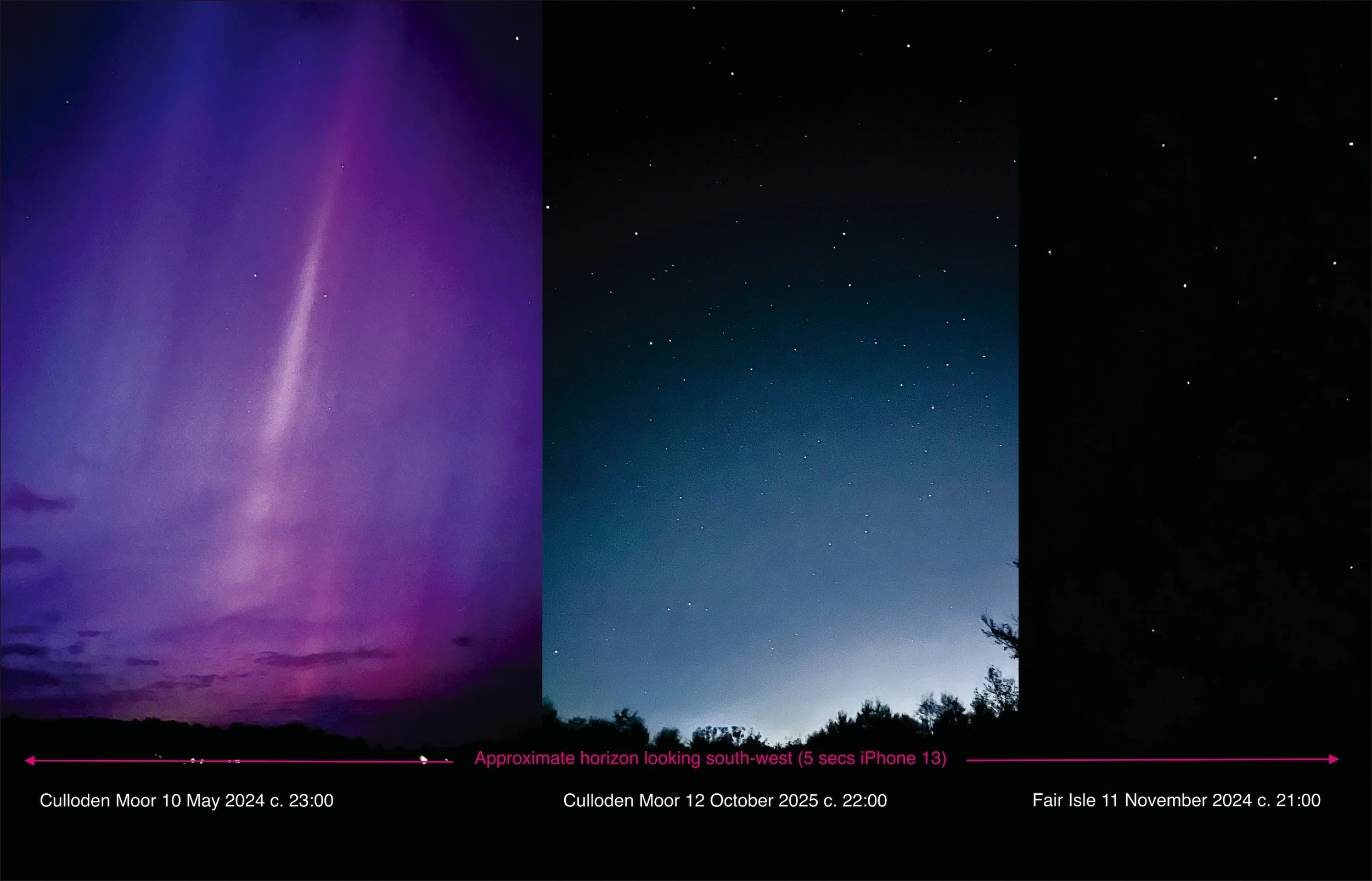
Creeping light from Inverness v Fair Isle.
This work begins with looking
Not the purposeful looking of a survey or an audit, but the sustained, patient kind, the sort that requires stillness and returns something unexpected. Over many years, working in the Scottish Highlands and beyond, I have been watching how light behaves in landscape: how it arrives, how it retreats, what it reveals and what its absence restores.
I am interested in darkness as much as illumination, in quiet as much as spectacle, in the texture of atmosphere and the character of place. At the heart of this practice is an awareness of what we are losing, gradually and often without notice. It is not merely visibility, but a particular quality of presence that has shaped human life and imagination for millennia.
Dark Skies is the most fully developed strand of this observational work. It is where the practice currently lives most clearly, and where it connects most directly to a wider conversation about light, ecology, and the future of night.
Dark skies are not about the removal of light, but its careful use. Thoughtful, well-directed illumination can coexist with the experience of the night sky, supporting safety, accessibility and shared public space while allowing darkness to retain depth and meaning.
The research follows light, or more precisely, its absence, along the Atlantic edge.
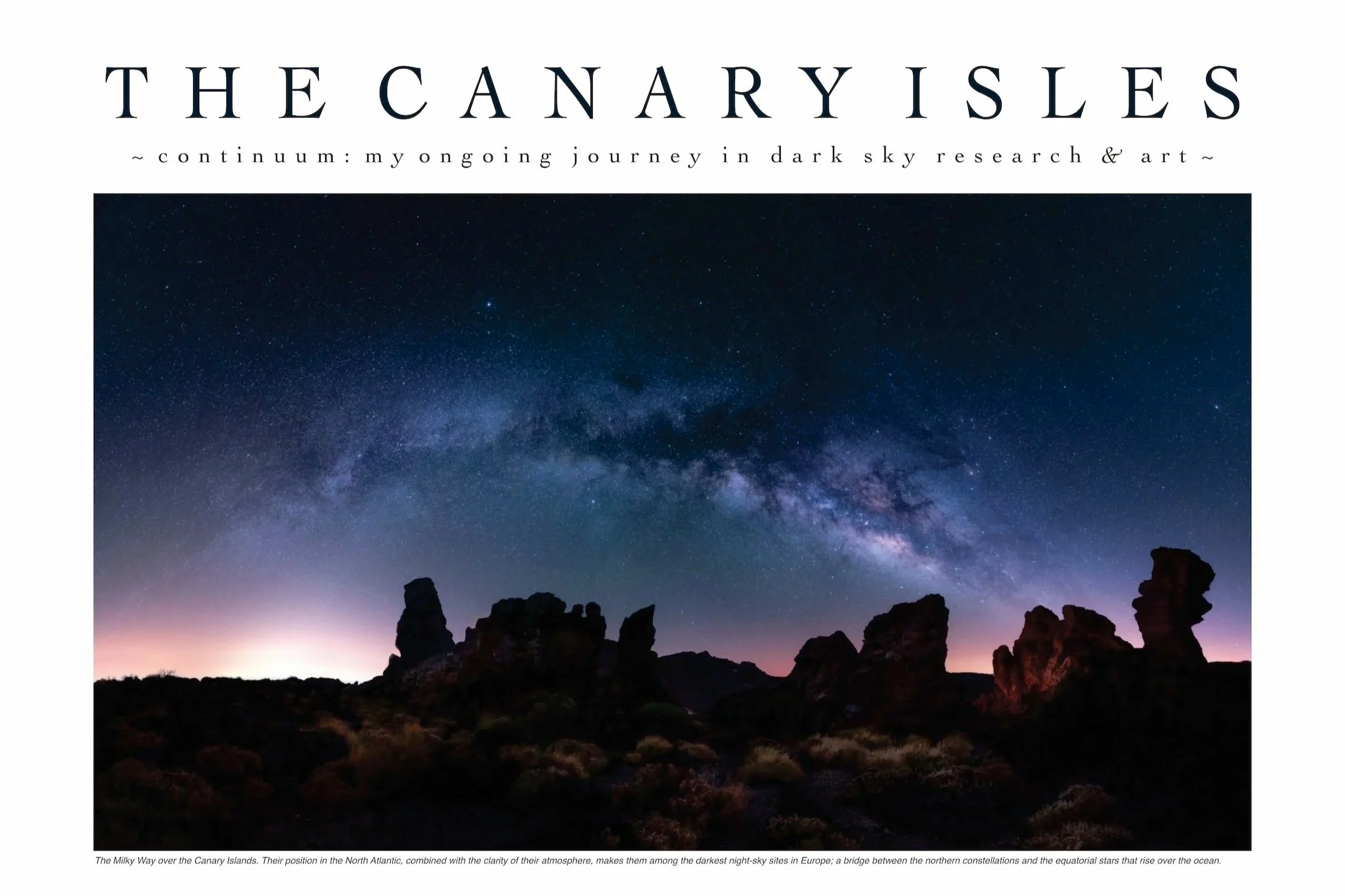
This next phase of work extends these observations beyond the Northern Isles, moving south through the Atlantic. On Fair Isle, the boundary between the North Sea and the Atlantic defines both the physical and perceptual horizon. Darkness there is sharp and immediate, shaped by wind, weather, and the closeness of the sea.
Further south, within the Canary Isles, the character of darkness changes. The air holds more moisture, the atmosphere more colour, and the constellations tilt at different angles. Light fades faster, but the night feels slower, and the transitions more fluid.
In these conditions, the division between sky and sea softens until both seem part of the same field. Here, light is not only something measured, but something felt, an atmospheric and cultural presence.
Each latitude holds its own darkness, not only in quantity but in tone and texture. In remote places, where artificial light is minimal, the night reveals its full depth. Stars regain their clarity and distance from one another, and familiar constellations shift subtly into new relationships.
This work considers how geography, atmosphere and human perception interconnect, and how darkness, when observed with patience, reveals continuity rather than isolation.